
Woven vs. Non-Woven Bags: The Ultimate Comparison Guide
Choosing the right bag for your brand is more than a cost calculation—it is a strategic decision that impacts product presentation, customer experience, and your brand’s sustainability message.
Woven and non-woven polypropylene bags are the two industry standards for retail packaging, promotional giveaways, and eco-friendly campaigns. While both are reusable and customizable, they differ significantly in construction, performance, and cost.
This guide breaks down the technical and practical differences to help you make the right choice for your brand.
1. Understanding the Materials
What are Woven Bags?
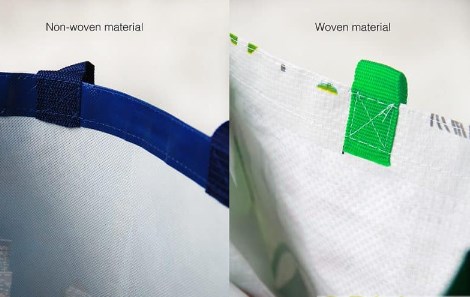
Woven bags are constructed by interlacing polypropylene (PP) strips in two directions (warp and weft). This cross-hatched structure creates a fabric with exceptional tensile strength.
The Result: A sturdy, structured material that feels like a heavy-duty fabric.
Durability: High. These are the “heavy-lifters” of the reusable bag world.
What are Non-Woven Bags?
Non-woven bags are also made from PP, but the fibers are bonded together using heat, pressure, or chemicals rather than being woven.
The Result: A lightweight, flexible material that feels somewhat like felt or soft paper.
Durability: Moderate. Ideal for everyday use and light-to-medium loads.
2. Head-to-Head Comparison
| Feature | Woven Bags | Non-Woven Bags |
| Construction | Interlaced strips (Woven) | Bonded fibers (Pressed) |
| Strength | Superior; handles heavy loads | Good; best for lighter items |
| Weight | Heavier & Structured | Lightweight & Soft |
| Cost | Higher (Premium) | Lower (Budget-friendly) |
| Printing | Laminated for high-def graphics | Best for simple screen printing |
| Reusability | Extremely high (Long lifespan) | High (Standard lifespan) |
3. Key Differences Explained
Durability and Load Capacity
Woven bags are significantly stronger. Because the material doesn’t stretch or tear easily under pressure, they are the preferred choice for supermarkets (groceries), bookstores, or carrying heavy hardware. Non-woven bags are better suited for “swag bags,” gift packaging, or light shopping.
Cost-Effectiveness
If your project involves a high-volume giveaway (e.g., 10,000 bags for a trade show), non-woven bags offer the best ROI. They are faster and cheaper to produce. Woven bags represent a higher upfront investment but provide a “premium” feel that customers are more likely to keep for years.
Printing & Branding Impact
Non-Woven: Typically uses screen printing. It is great for 1-2 color logos but less effective for complex photos.
Woven: Often features BOPP lamination, allowing for full-color, photographic-quality printing and a glossy or matte finish. This makes the bag a “walking billboard” with high visual impact.
4. Which One Should Your Brand Choose?
Choose Woven Bags If:
You are a retail or grocery brand where customers carry heavy items (bottles, canned goods).
You want a premium brand image with high-gloss, full-color designs.
Sustainability is a core message; the longer lifespan of a woven bag means it stays out of landfills longer.
Choose Non-Woven Bags If:
You are organizing a trade show, conference, or charity event and need bulk quantities.
You are a boutique or gift shop looking for a lightweight, soft-touch alternative to paper bags.
You are working with a tight marketing budget but still want an eco-friendly reusable option.
5. Summary of Best Uses
Woven: Supermarket shopping, beach bags, trade show “power” bags, industrial packaging, and high-end retail.
Non-Woven: Conference giveaways, hospital/pharmacy bags, dry cleaning covers, and light-duty tote bags.
Frequently Asked Questions (FAQs)
Q: Are woven bags waterproof?
A: When laminated (which is common), woven bags are highly water-resistant and easy to wipe clean.
Q: Can both types be recycled?
A: Yes. Both are typically made from #5 Polypropylene (PP) and can be recycled in facilities that accept textile-grade plastics.
Q: Which bag is better for the environment?
A: Both are “eco-friendly” because they replace single-use plastic. However, woven bags are often considered superior for sustainability because their extreme durability ensures they are reused hundreds of times more than non-woven alternatives.
Final Thoughts
There is no “better” bag—only the right bag for your specific goal. If you need a durable, high-impact retail bag, Go Woven. If you need an affordable, versatile promotional tool, Go Non-Woven.
Ready to start your custom bag project? Contact us today for a wholesale quote and design consultation!

